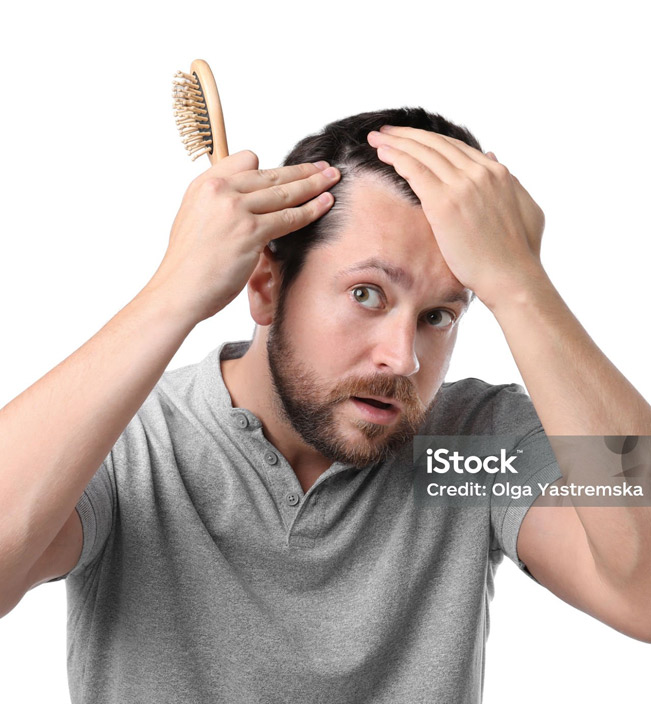
Understanding the Causes and Solutions for Different Hair Loss Conditions
Hair loss affects millions of people worldwide, occurring in various forms and caused by different underlying factors. Understanding the type of hair loss you are experiencing is essential for finding the right treatment. Below, are some of the types that we deal with.
- Female Hair Treatments
- Afro Hair
- Curly & Straight Hair

Androgenetic Alopecia
Androgenetic alopecia, commonly known as male pattern baldness or female pattern hair loss, is the most common form of hair loss. It is a genetic condition caused by hormonal changes that lead to hair thinning over time.
- In men: Hair loss typically begins at the temples and crown, forming an "M" shape.
- In women: Hair thinning usually starts at the parting and spreads across the scalp, but complete baldness is rare.

Alopecia Areata
Alopecia areata is an autoimmune disorder where the body mistakenly attacks hair follicles, causing sudden hair loss in small, round patches.
- In some cases, hair loss can progress to alopecia totalis (complete scalp hair loss) or alopecia universalis (total body hair loss).
- It can occur at any age and is often unpredictable.
- Treatments may include corticosteroids, immunotherapy, or light therapy.

Telogen Effluvium
Telogen effluvium is a temporary type of hair shedding caused by a shock to the system that disrupts the hair growth cycle. Common triggers include:
- Severe stress
- Illness or infections
- Surgery or rapid weight loss
- Hormonal changes (post-pregnancy, menopause)
- Certain medications (antidepressants, blood thinners, etc.)
-
In most cases, hair regrows within six months to a year once the underlying cause is addressed.

Traction Alopecia
Traction alopecia occurs when excessive tension is applied to hair follicles over time due to:
- Tight hairstyles (braids, ponytails, weaves)
- Frequent use of hair extensions
- Habitual hair pulling (trichotillomania)
-
If detected early, reversing the damage is possible by avoiding tight hairstyles and giving the scalp time to heal.

Cicatricial Alopecia (Scarring Hair Loss)
Cicatricial alopecia refers to permanent hair loss caused by inflammation that destroys hair follicles and replaces them with scar tissue. It can result from medical conditions such as:
- Lichen planopilaris
- Discoid lupus erythematosus
- Central centrifugal cicatricial alopecia (CCCA)

Anagen Effluvium
Anagen effluvium is rapid hair loss caused by damage to hair follicles during the anagen (growth) phase. It is most commonly associated with:
- Chemotherapy or radiation therapy
- Toxic exposure
- Severe infections
-
Unlike telogen effluvium, hair loss occurs suddenly but often regrows once treatment stops.

Trichotillomania (Hair-Pulling Disorder)
Trichotillomania is a psychological condition where individuals compulsively pull out their hair, leading to noticeable bald patches. It is classified as an impulse control disorder and often requires behavioural therapy and psychological support for treatment.

Seeking Professional Help
If you are experiencing hair loss, it is essential to consult a qualified specialist to determine the cause and find the best treatment. Many types of hair loss can be managed or treated effectively with medical interventions, lifestyle changes, and advanced hair restoration techniques.
For expert guidance and personalised treatment plans, get in touch with a hair loss specialist today.
Meds For Hair-Loss
The U.S. FDA-approved hair restoration medications are:
- Minoxidil (Rogaine®)—a topical solution available over-the-counter in 2% and 5% strengths.
- Minoxidil is effective in some people, moderately effective in some, and ineffective in others. When effective, minoxidil can retard hair loss and stimulate new hair growth. Its mechanism of action is not well understood. Best results with minoxidil are often achieved by combining the topical solution with hair restoration surgery.
- Finasteride (Propecia®)—an oral medication that treats the root cause of male- pattern hair loss by inhibiting the activity of the hormone responsible for hair loss. Finasteride is available only by prescription. Finasteride is usually not prescribed for women; women who may become pregnant are at risk for a certain type of birth defect in the unborn child. Finasteride works best for early to moderate degrees of hair loss. Men with extensive hair loss are unlikely to have much regrowth. Regrowth associated with finasteride is better over the crown of the scalp than at the frontal receding hairline. When used in conjunction with hair transplantation, finasteride may prevent further hair loss while transplantation fills in areas such as the frontal hairline.

